
In this guide
Plan the visit around your tour session and language, then leave time to look closely at the carvings. This guide follows a sequence through the Sanctuary of Truth’s wooden museum on the Naklua coast, with dress and access questions to settle before arrival. For the ticket breakdown and sales cutoffs, use the Sanctuary of Truth attraction page.
The official museum frames the building around questions of human origins, conduct, purpose and the relationship between people and the wider universe. Listening to that introduction can help you choose which figures and details to spend time with.
Construction began in 1981 and the carving work continues. That ongoing process is not a defect waiting to be hidden: it is part of the visit. It also means protective equipment, noise, barriers and the exact route can differ from older photographs.
Choose the correct session
The museum publishes separate day and night operations. At the time of this update, daytime tickets are available from 08:00 to 17:00 and the day-tour schedule runs from 08:20 to 18:00. The night-tour schedule runs from 18:20 to 20:30, with its own ticket-sales window. Adult admission is listed as 500 baht by day and 700 baht at night.
Those figures are planning information, not a promise for a future date. Check the official visitor page before leaving because prices, child-height rules, schedules and promotions can change.
Daylight is the stronger choice for a first visit focused on carving. Side light reveals the depth of figures, roof edges and joinery, while the coastal grounds are easier to understand. The night tour is a distinct illuminated experience. Do not assume that buying the later ticket simply extends an ordinary daytime entry.
Understand what you are visiting
The Sanctuary is often called a temple, castle or temple-palace, but the official presentation describes a museum with a universal philosophical programme. It draws on art and ideas from across Eastern traditions. This is why figures from different cultural and religious frames appear in one building.
Thailand’s government information calls it a massive temple-like structure and a living museum. It also notes the traditional wood construction without metal nails. The museum’s own description is slightly more precise in explaining ancient joining techniques used in place of nails. Avoid reducing the building to the claim that it is “all teak”; the official site refers to various kinds of wood.
The work is ongoing because carved timber exposed to a marine climate requires maintenance and replacement. A craftsperson making a new element is continuing the building’s life, not merely finishing a delayed project. Observe without crossing barriers or interrupting work.
Get there from Pattaya
The museum is at 206/2 Moo 5 on Pattaya–Naklua Road in Bang Lamung, north of central Pattaya. A car or motorbike taxi is the simplest direct option. A shared songthaew through Naklua may reduce the cost, but the final approach still needs to be confirmed and may involve a walk.
Show the Thai or English address and the Sanctuary of Truth attraction page to the driver. If arranging a return ride, agree whether the driver waits or whether you will book again. App pickup can be easier near the main entrance than at a lower point within the grounds.
The official visitor page lists free parking. Drivers should still follow staff directions because event and crowd arrangements can change. Allow time between arrival and a preferred language tour rather than expecting to step from the car directly into the building.
Use the guided introduction
The carvings are too dense for a quick visual scan to explain them. The museum publishes frequent English tours and scheduled Thai, Chinese, Russian, Arabic, Japanese and Korean options, with details varying by language and day. A guide or audio introduction provides the organising ideas that make later independent looking more useful.
At the counter, ask:
- when the next tour in your language begins;
- where the meeting point is;
- whether the route is fully walking or uses a transfer;
- which protective equipment is required;
- whether any area is closed for work;
- when you may continue independently.
Do not build a tight plan around one departure copied from an old blog. The official schedule is detailed, but staffing and site conditions can still affect the day. Arrive with room to take the next available session.
Follow a focused viewing route
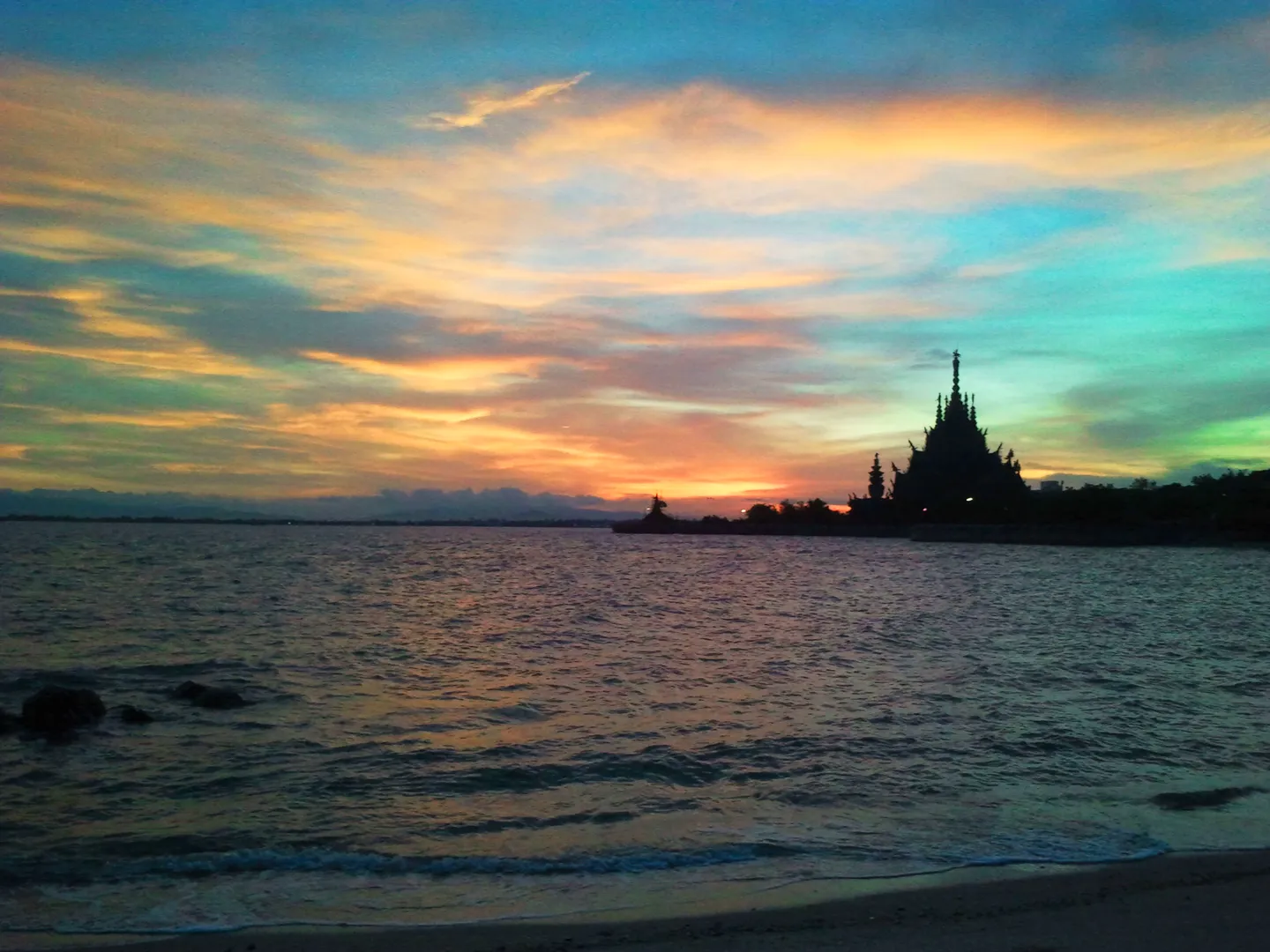
Begin with the silhouette. From the upper grounds or recognised viewpoint, notice how the spires, wings and roof figures create a form that changes as you move. The coastal background is part of the composition, so take the broad exterior photograph before concentrating on details.
Inside, choose a sequence rather than trying to photograph every surface. First look up to understand the columns and roof structure. Then select one group of figures and listen to its explanation. Finally, examine the joinery and the contrast between older and recently worked timber.
The visual programme is not a simple list of gods or legends. Ask how each section connects to family, moral conduct, knowledge, the elements or human responsibility. Even if you do not share the philosophical framing, that question produces a more coherent visit than collecting isolated labels.
Step outside again after the interior. Changing light often makes exterior figures readable in a different way. A normal or short telephoto lens is useful for roof details; a wide lens helps with the full structure but can distort figures at the edges.
Dress and move safely
Wear clothing suitable for a cultural site: shoulders and knees covered is the safe baseline. Bring a light layer rather than relying on a rental cover being available. Secure shoes are better than loose flip-flops for stairs, slopes and uneven surfaces.
Follow staff instructions on hard hats or other protective equipment. Do not remove safety gear for a photograph inside an active work zone. Keep behind rails and barriers even if another visitor steps through them.
Heat and humidity can make the descent and return more tiring than expected. Carry water, take shade breaks and avoid rushing uphill to meet a car. Families should keep children close around tools, stairs and the water’s edge.
Separate the museum from optional activities
The official site lists food, viewpoints and several other activities around the wider grounds, including animal-related experiences. These are not necessary to understand the Sanctuary. Decide on each one separately, check its current price and schedule, and consider animal-welfare implications before participating.
An older guide may mention dolphin or elephant activities as though they are a permanent part of admission. That is not a reliable way to plan. The museum’s current ticket details and activity pages should define what is operating, while your own welfare standard should define what you support.
Combine the visit carefully
Naklua and Wong Amat make the most coherent continuation because they keep the day in northern Pattaya. A relaxed plan is the Sanctuary first, then lunch and a walk in the Naklua area. Trying to combine it with Pratumnak’s hill sights crosses the central city and adds traffic.
If you have only one cultural attraction day, compare this experience with Big Buddha Hill. The Sanctuary is a paid, extended museum visit with guided interpretation; Wat Phra Yai is a shorter visit to a working Buddhist temple. They are complementary rather than substitutes.
Allow roughly two to three hours for the Sanctuary itself. Add time for transport, food or optional grounds. Confirm the chosen session, current price and language schedule on the official site shortly before travel, then let the woodwork set the pace once you arrive.
Useful to know
- Treat day and night admission as different products and verify the session before paying.
- Wear secure shoes for stairs and uneven surfaces, and use the required protective equipment in active work areas.
- The carving programme is ongoing, so noise, barriers and the exact visitor route can change.
- Animal encounters advertised elsewhere on the grounds are optional; assess their welfare implications separately from the museum.
Frequently asked questions
How long should I allow for the Sanctuary of Truth?
Allow roughly two to three hours for arrival, the transfer or walk down, a guided introduction and unhurried carving details. A fast visit is possible, but the building rewards looking beyond the exterior. Add more time if you plan to eat, attend other activities or photograph changing light.
Is the Sanctuary of Truth a working temple?
It is presented as a museum and temple-like philosophical structure rather than an ordinary neighbourhood wat. Its imagery explores Eastern philosophy, morality and the relationship between people and the universe. Visitors should still dress and behave respectfully because the setting and symbolism are sacred to many people.
Do I need a guided tour at the Sanctuary of Truth?
Use the included or available guided introduction if you want the carvings to make sense rather than appear as decoration. The museum publishes frequent English departures and schedules for several other languages. Confirm the day's language and meeting point at the ticket counter because operations can change.
What is the difference between the day and night tours?
They operate in different time windows and have different published adult prices. Daylight gives the clearest view of fine carving and the coastal setting; the night session changes the atmosphere through illumination. Check exactly what the chosen ticket includes instead of assuming every daytime activity continues after dark.
Can children and visitors with limited mobility visit?
Families can visit, but supervise children around stairs, tools, barriers and the waterfront. Visitors with limited mobility should contact the museum before booking to confirm the current route, transfer assistance and accessible facilities. Ongoing work can change which paths are open, so a past visitor's route may not apply.