

In this guide
Pattaya is a useful place to learn the range of Thai food because it combines regional cooking, Isan favourites, central Thai standards, seafood and late-night one-dish meals. The city also has international restaurants, but a visitor can eat differently at every Thai meal without working through a checklist of famous dishes.
Vary the format across your trip: a made-to-order rice plate, a shared curry meal, a seafood dinner and a market snack. You can explore different flavours without needing a large restaurant order every time.
Pick the meal first
| Your meal | A practical starting order | What to decide |
|---|---|---|
| A quick lunch for one | Pad kra pao with rice, or a noodle bowl | Protein, chilli level and whether an egg is extra |
| Dinner for two | One curry or soup, one vegetable dish, a shared main and rice | Portion sizes before adding more dishes |
| A seafood meal | One whole fish or a chosen weight of seafood, plus rice and a vegetable dish | Price unit, weight and cooking charge |
| A market snack | A small portion of ho mok, khao lam or another prepared item | Ingredients, when it was made and how soon to eat it |
These are suggested orders, not fixed meal packages. Start with fewer dishes and add more if needed. For restaurant browsing, use the Thai-food directory, seafood directory or cafés and coffee shops according to the meal you want.
A first-timer’s tasting map
| Food style | Good starting dish | Main character | Ordering note |
|---|---|---|---|
| Isan salad | Som tam | Sour, salty, sweet and chilli-hot | Specify heat and whether fermented fish is wanted |
| Soup | Tom yum goong | Aromatic, sour and hot with prawns | Ask clear or creamy if both versions are offered |
| Curry | Green curry or massaman | Herbal and hot, or rich and gently spiced | Order rice separately if not included |
| One-dish meal | Pad kra pao with rice | Stir-fried basil, garlic and chilli | Add a fried egg and choose the protein |
| Seafood | Steamed fish with lime or grilled prawns | Direct, fresh flavours | Confirm weight and cooking charge |
| Dessert | Mango sticky rice | Sweet coconut rice and ripe mango | Availability and mango quality vary seasonally |
These are starting points, not a ranking. Thai menus are broad, English spellings vary and the same dish changes with region and cook. Photographs and the Thai name on a menu can be more dependable than arguing over transliteration.
Salads and Isan food
Som tam combines shredded green papaya with lime, fish sauce, palm sugar, chilli and other ingredients pounded in a mortar. A common visitor-friendly version includes tomato, long bean and peanuts. Other versions may contain salted crab or pla ra, a fermented-fish seasoning with a much stronger profile.
Tell the server how many chillies you want or ask for mai phet, not spicy. No chilli changes the balance but still leaves lime, sweetness and salt. Anyone with a peanut allergy must say so clearly; simply asking for peanuts to be omitted does not ensure a mortar and utensils free from residue.
Som tam is often eaten with sticky rice, grilled chicken, grilled pork neck and larb. Larb is a minced meat, fish or mushroom salad with lime, herbs, chilli and toasted rice powder. Ordering three or four dishes to share produces a more balanced meal than one large plate of papaya salad.
Soups and curries
Tom yum goong is a hot-and-sour prawn soup scented with lemongrass, galangal and makrut lime leaves. Clear and creamy versions exist. The herbs add aroma but are not all meant to be chewed; set aside tough pieces of lemongrass and galangal.
Tom kha gai uses coconut milk, galangal and chicken for a rounder, usually gentler soup, though chilli can still appear. It is a good bridge for diners who find a sharp tom yum too intense.
Green curry is fragrant, coconut-rich and potentially hot. Massaman curry is generally milder, with warm spices, potato and peanuts, commonly with chicken or beef. Ask about peanuts if allergic. Red curry, panang and southern curries bring different textures and heat, so the colour alone is not a reliable chilli scale.
Thai curries are normally eaten with rice and shared. Spoon a small amount over rice rather than treating the curry bowl as a Western soup. Rice may be charged separately, particularly in restaurants serving shared dishes.
Rice and noodle meals
Pad kra pao is a made-to-order meal of meat, seafood, tofu or mushrooms stir-fried with basil, garlic and chilli, served over rice. A fried egg adds richness. Request the heat level when ordering.
Khao pad, Thai fried rice, can be ordered without added chilli. Condiments let the diner add acidity and heat. Khao man gai pairs poached chicken and seasoned rice with a separate sauce, while khao moo daeng uses red roast pork, rice and gravy.
Pad thai balances rice noodles, tamarind, egg and other savoury-sweet elements, with lime, chilli and peanuts added to taste. It deserves a meal, but it is one noodle dish among many. Boat noodles, wide noodles with soy sauce and rad na noodles in gravy show different ends of the range.
Most one-dish meals are ordered per person, while curries, whole fish and salads are shared. If a table wants everything together, say so; otherwise dishes may arrive whenever each station finishes, which is normal in many casual Thai restaurants.
Pattaya and Chon Buri seafood
Pattaya’s coastal location makes seafood an obvious focus, but proximity to the sea does not guarantee that every item was landed that morning. Choose restaurants and stalls with clear turnover, clean ice and tanks or displays in good condition. Ask what is local and what is priced by weight.
The TAT describes fresh seafood and regional delicacies as part of Chon Buri’s identity. Ho mok, a steamed curry custard often made with fish, is one useful local dish to seek out. It may arrive in a leaf cup or as a larger portion, with a soft texture and aromatic curry flavour.
Whole fish steamed with lime, garlic and chilli is good for sharing. Grilled prawns, squid and shellfish put more emphasis on the ingredient, usually with a sharp seafood dipping sauce. Fried fish with herbs or fish-sauce glaze is easier for diners who prefer crisp texture.
Before ordering from a weight display, establish the unit. A large numeral can mean price per 100 grams rather than per plate. Point to the exact fish or shellfish, watch the scale and confirm how preparation, sauce and service are charged. At Lan Pho and similar markets, one seller may charge for the raw seafood and another for cooking.
For example, a hypothetical quote of ฿90 per 100 grams for an 800-gram fish is ฿720 before any separate charges. That is an arithmetic example, not a Pattaya market price. Ask the seller to write the actual total before preparation starts; comparing two signs is meaningless if one uses kilograms and the other uses 100 grams.
Three ways to turn the dishes into a meal out
Seafood in Naklua: the Michelin Guide’s Krua Nai Baan listing, checked on 13 September 2026, identifies the restaurant on Soi Naklua 13/9. Its inspectors describe a changing seafood menu and highlight a sour soup made with snakehead fish and bilimbi. This is an attributed guide suggestion, not our own tasting or a claim of a Michelin star. Confirm the day’s dishes directly; the guide lists 099 149 4693 and says the restaurant handles bookings itself.
Several separate orders in North Pattaya: Terminal 21’s mall floor guide, checked on 13 September 2026, identifies the food court on floor 3. A food court lets a group compare individual dishes before committing to a shared restaurant meal. Use our Terminal 21 guide to plan the stop; no single stall price or vegetarian preparation standard applies across the floor.
A planned restaurant meal: open the Pattaya restaurant directory and choose the area before a menu. A seafood dish in Naklua, a café breakfast on Beach Road and a meal on Pratumnak can involve different journeys. Check the exact venue, the menu’s source date and your group’s requirements rather than travelling across town for a dish name alone.
Chon Buri snacks and sweets
Khao lam is sweet sticky rice with coconut cooked inside bamboo. TAT’s material on Nong Mon Market identifies it as a signature sweet, alongside khanom chak, a grilled coconut and sticky-rice preparation wrapped in palm leaves. These make useful regional alternatives to the desserts seen on every tourist menu.
Nong Mon is by Bang Saen, outside Pattaya itself. TAT’s article places the market on Sukhumvit Road near Bang Saen Beach; it is a separate regional stop, not a Pattaya neighbourhood market. If you are buying khao lam there, TAT suggests asking the seller to open the bamboo so it is easier to eat. The article dates from 2020 and was reread on 13 September 2026; it supports the dish and location context, not today’s stall hours or prices.
Mango sticky rice combines coconut-seasoned glutinous rice with mango and often crisp mung beans. The dish is simple, so mango ripeness matters. Tub tim grob, red water-chestnut pieces in coconut milk, and coconut ice cream offer cooler finishes.
Thai sweets can be intensely sweet and coconut-heavy. Share portions to try more than one. Market packaging may not list allergens or storage instructions, so ask when a product was made and how long it keeps before buying it as a gift.
Spice, vegetarian food and allergies
Thai cooking uses chilli in different ways: pounded into a paste, fried into a dish or served as a condiment. Mai phet is a request for no heat, not a laboratory standard. A cook may reduce fresh chilli while a curry paste remains spicy.
Vegetarian visitors should name excluded ingredients. Fish sauce, oyster sauce, shrimp paste, dried shrimp, meat stock and egg can be present even when the visible ingredients are vegetables and tofu. Jay food follows a stricter plant-based tradition, commonly avoiding animal products and certain pungent plants, but still ask if cross-contact matters.
Severe allergies require more caution than a translated card alone can provide. Shared woks, mortars, grills, oil and utensils are routine in small kitchens. Choose a restaurant able to discuss the requirement, keep emergency medication accessible and do not interpret a polite nod as proof of an allergen-control process.
Markets, local restaurants and guide selections
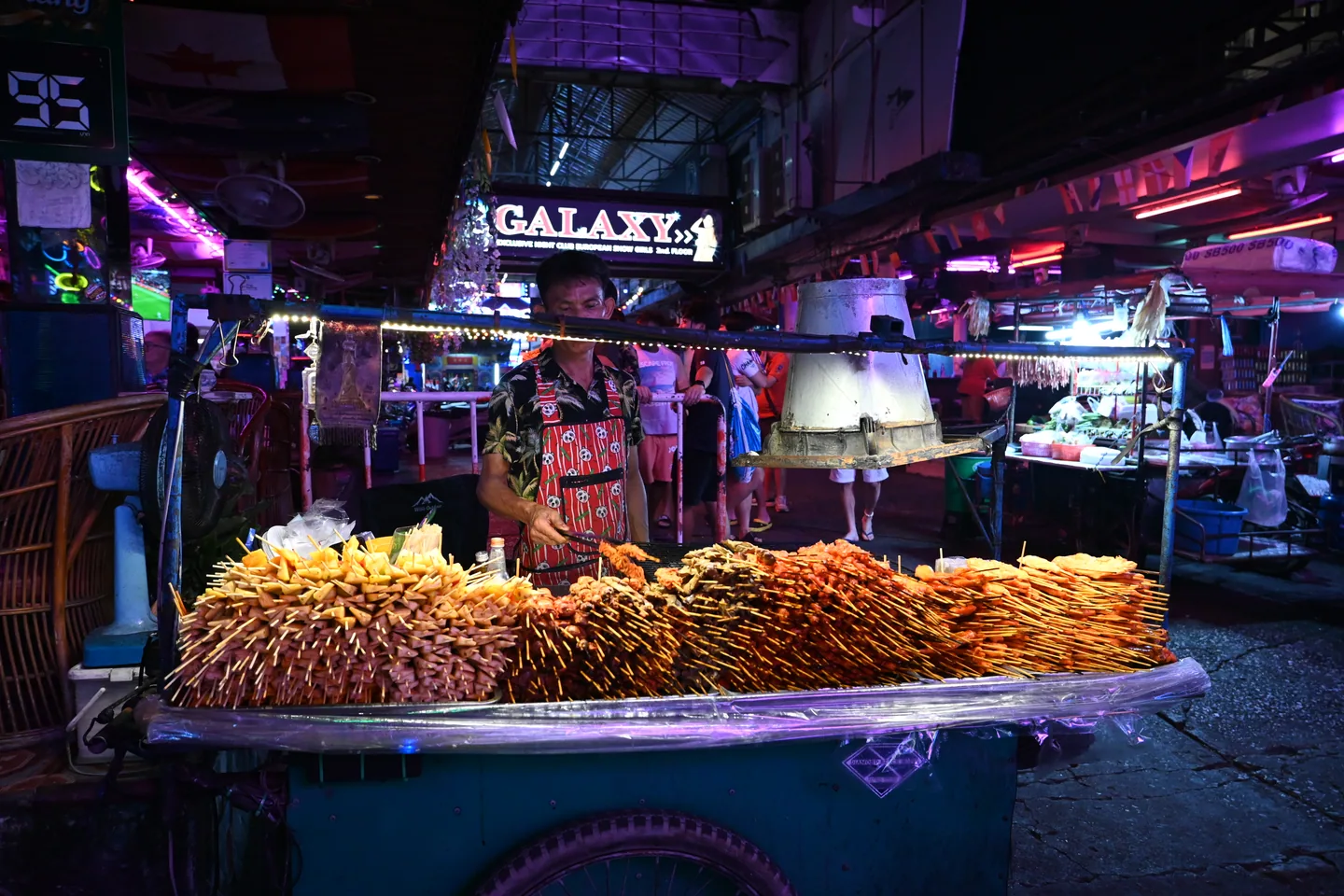
Street stalls work well for foods cooked to order in front of the customer. Look for clean handling, separate raw and cooked ingredients, hot food served hot and steady turnover. Popularity is useful context, but a queue does not guarantee allergy safety.
Local shophouse restaurants often specialise in one family of dishes. A short menu can be a strength. Larger Thai restaurants are easier for groups because they offer salads, soup, curry and fish for sharing in one place.
Michelin’s 2026 Thailand selection includes Chon Buri, providing an independent source of current restaurant ideas across the province. Use it alongside recent menus and local information, then check the exact branch, opening day and price before travelling. Awards and reviews do not replace the practical checks that determine whether a meal suits a particular group.
A balanced day of eating
Start with a rice or noodle breakfast, use a one-dish lunch such as pad kra pao, then share som tam, grilled meat, sticky rice and a soup in the evening. On another day, make seafood the main meal and finish with khao lam or mango sticky rice. This rhythm covers more of Thai cooking without over-ordering at a single sitting.
Menus, prices, opening days and seafood supply change. Confirm weights and additions before ordering, state dietary needs clearly and let the table share several dishes rather than chasing a rigid top-ten list.
Useful to know
- Thai dish spellings vary in English, so a photograph can be more useful than exact transliteration.
- Ask whether a seafood price is per item, per 100 grams or per kilogram before ordering.
- Saying vegetarian does not always exclude fish sauce, oyster sauce, shrimp paste or stock.
- A queue shows popularity, not guaranteed allergen control or food safety.
- Order several dishes with rice for the easiest introduction to shared Thai dining.
- Use the phrase mai phet for not spicy, but kitchens interpret heat levels differently.
Frequently asked questions
What Thai dishes should a first-time visitor try in Pattaya?
Start with som tam, tom yum goong, a curry, pad kra pao, grilled or steamed seafood and mango sticky rice. That covers sour, hot, aromatic, savoury and sweet flavours without making every meal a noodle dish. Add ho mok or another Chon Buri seafood speciality for a stronger local connection.
Is all Thai food in Pattaya very spicy?
No. Grilled meats, fried rice, many noodle dishes, massaman curry and desserts can be mild, while som tam and some soups or curries may be hot. Ask for mai phet if you want no chilli, but recipes and interpretations vary. A dish can still be strongly seasoned even when its heat is reduced.
How do I order seafood without a price surprise?
Confirm whether the posted price is for one piece, 100 grams or a kilogram, then choose the item and watch it being weighed. Ask whether cooking, sauce, rice, tax and service are separate. Repeat the total before preparation begins. For market seafood, the seller and cook may charge independently.
Can vegetarians eat easily in Pattaya?
There are many vegetable, tofu, noodle and rice options, but ordinary Thai kitchens may use fish sauce, oyster sauce, shrimp paste, egg or meat stock. Say what you do not eat rather than relying only on vegetarian. Look for jay food when stricter plant-based preparation matters, while still asking about kitchen practice.
Where should I look for reliable restaurant ideas?
Use several signals: a current menu, recent local feedback, visible turnover and an independent guide. Michelin's Thailand coverage now includes Chon Buri, while TAT material is useful for regional dishes. Neither replaces checking the exact restaurant's opening day, location, price level and suitability for allergies before travelling.